You Won’t Believe What I Found Wandering Da Lat’s Urban Heart
Wandering through Da Lat feels like stepping into a dreamy collage of moss-covered alleys, pastel buildings, and quiet plazas wrapped in mountain mist. It’s not just a highland escape—it’s a city that breathes creativity and calm. I roamed without a map and discovered how its urban spaces blend French colonial bones with local soul. This is urban wandering at its most poetic—where every corner tells a story, and stillness speaks louder than crowds. In a world that often prizes speed and spectacle, Da Lat offers a different rhythm: one of gentle discovery, soft light, and intimate encounters with place. To walk here is not to check off landmarks, but to feel the city breathe beneath your feet.
The First Glimpse: Arriving in Da Lat’s Misty Embrace
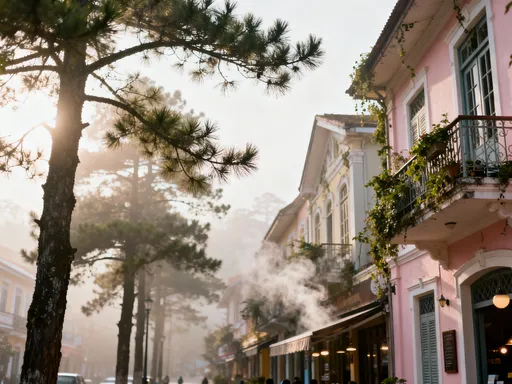
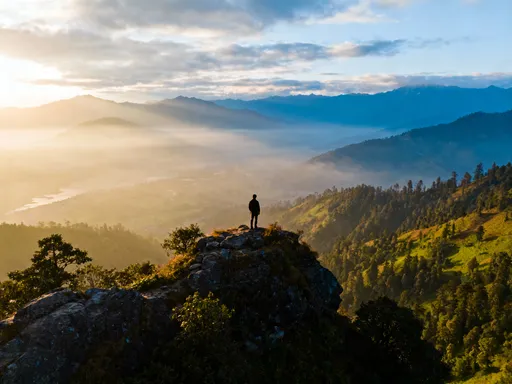
Descending into Da Lat from the winding mountain roads, one is met first by the air—cool, crisp, and carrying the faint, earthy perfume of pine and damp soil. At nearly 1,500 meters above sea level, the city rests in a highland cradle, where temperatures hover in the low 20s Celsius year-round, offering a natural reprieve from Vietnam’s tropical lowlands. Unlike bustling coastal cities or the kinetic energy of Hanoi and Ho Chi Minh City, Da Lat greets visitors with hushed tones and softened edges. Buildings emerge like watercolor smudges through the morning fog, their outlines blurred by mist that lingers into midday. This atmospheric veil does more than set a mood—it invites a slower pace of engagement.
The city’s modest size, just over 200 square kilometers, belies its rich spatial diversity. What Da Lat lacks in scale it compensates for in texture. Its urban layout is neither rigid nor chaotic, but organically layered—hills dictate street patterns, and elevation changes create unexpected vistas around every bend. There are no sprawling highways or towering glass facades; instead, the built environment feels human-scaled, almost domestic. This is a city designed not for efficiency, but for lingering. Visitors accustomed to fast-paced itineraries may find themselves instinctively slowing down, drawn into a kind of urban meditation.
Arriving by minivan or motorbike, one notices how the transition from rural to urban is seamless. Vegetable farms blend into residential lanes, and flower nurseries sit just steps from coffee shops. There’s no abrupt city limit, no jarring shift in landscape. This continuity reinforces the sense that Da Lat is not imposed on nature, but grown from it. The city’s rhythm is set not by traffic lights or business hours, but by the sun’s passage over the hills and the daily routines of market vendors, students, and artisans. For the wandering traveler, this means every step forward is also a step inward—a journey not just across space, but into a different way of being.
Colonial Echoes: Walking Through Time on Tree-Lined Boulevards
Da Lat’s urban identity is deeply shaped by its French colonial past, a legacy visible in its architecture, street patterns, and overall aesthetic. Constructed in the early 20th century as a hill station for French officials and settlers seeking relief from the heat, the city was designed with European sensibilities—wide, tree-lined avenues, symmetrical layouts, and villas inspired by Alpine and Mediterranean styles. Today, these elements remain intact, not as museum pieces, but as living parts of the city’s fabric. Streets like Nguyen Thi Minh Khai and Tran Phu are shaded by towering jacaranda and eucalyptus trees, their canopies forming a green tunnel that softens the sunlight and muffles city sounds.
The architecture along these boulevards speaks of a bygone era, yet it has been gently repurposed rather than preserved behind glass. Colonial-era villas with terracotta roofs and wrought-iron balconies now house boutique hotels, art galleries, and family-run cafés. Some buildings retain their original stucco facades, weathered to soft yellows, peaches, and sage greens, while others have been painted in bolder hues, reflecting contemporary tastes without erasing history. Balconies overflow with bougainvillea and ferns, blurring the line between structure and nature. These are not static monuments, but adaptive spaces that continue to serve the community.
Walking these streets feels like moving through layers of time. One moment, you’re passing a 1930s administrative building with arched windows and shuttered doors; the next, you’re beside a modern bookstore tucked into a converted garage. The urban rhythm here is neither hurried nor abandoned—it’s gently alive, sustained by a balance between preservation and evolution. Unlike cities where modernization has erased historical character, Da Lat has allowed its past to inform its present. The wide sidewalks encourage strolling, the shade invites pauses, and the absence of heavy traffic makes it safe to wander without urgency.
Even the street names reflect this duality. While many roads retain Vietnamese names honoring national figures, their layouts and proportions remain distinctly French. This architectural hybridity mirrors the city’s cultural identity—a blend of highland traditions, colonial influences, and modern Vietnamese life. For the urban wanderer, this creates a rich sensory experience: the crunch of gravel underfoot, the scent of old wood and damp stone, the sight of sunlight filtering through leaves onto textured walls. Each step becomes a quiet dialogue with history.
Café Culture as Urban Living Room
In Da Lat, cafés are more than places to drink coffee—they are the city’s living rooms, informal gathering spaces where social life unfolds at a relaxed pace. With over 300 cafés scattered across its hills, the city has elevated coffee culture into a form of urban design. These spaces vary widely in style and atmosphere, yet they share a common purpose: to provide comfort, connection, and a reason to stay awhile. From glass-walled hilltop cafés with panoramic views to tucked-away basement spots playing vintage vinyl, each establishment contributes to the city’s reputation as a destination for mindful retreat.
One might begin the day at a quiet café overlooking Xuan Huong Lake, where steam rises from a cup of cà phê sữa đá—Vietnamese iced coffee with condensed milk—while mist rolls across the water. Another afternoon could be spent in a converted villa with creaky wooden floors, where books line the walls and patrons whisper over laptops or sketchbooks. Some cafés are designed for solitude, with individual nooks and reading lamps; others encourage conversation, with circular seating and shared tables. What unites them is an ethos of lingering. There is no pressure to turn over tables or rush through orders. Time moves differently here.
This café-centric lifestyle has shaped how people interact with urban space. Unlike cities that rely on formal plazas or parks for public life, Da Lat’s social energy flows through its cafés. They function as neutral ground where students, artists, retirees, and travelers coexist without pretense. A grandmother might sip tea in one corner while a group of young locals debates music in another. The ambient soundtrack—often soft jazz, folk, or lo-fi beats—further enhances the sense of calm. These spaces are not just commercial enterprises; they are community anchors.
Moreover, many cafés are integrated into the city’s topography, built into slopes or perched on ridges, requiring a climb of stairs or a short hike to reach. This physical effort adds to the sense of discovery, turning each visit into a small adventure. Some of the most beloved spots are not easily found—accessible only by narrow paths or unmarked alleys—rewarding those who wander off the main roads. In this way, café culture reinforces the value of exploration and serendipity. It’s not about convenience, but about experience. And in a world increasingly dominated by chain coffee shops and fast service, Da Lat’s cafés stand as a quiet rebellion—a reminder that some of the best moments happen when we simply sit, observe, and let the world unfold around us.
Hidden Passages and Staircase Streets: The Secret Rhythm of Movement
One of Da Lat’s most enchanting qualities is its verticality. Built across rolling hills and steep inclines, the city is connected by a network of staircases, footpaths, and narrow alleyways that link neighborhoods at different elevations. These informal routes—often overlooked by guidebooks—are where the city’s authentic pulse can be felt most clearly. Unlike the orderly boulevards, these passages are intimate, sometimes overgrown, and always full of surprise. They are the veins through which daily life quietly flows.
Wandering beyond the main streets, one encounters staircases carved into the hillside, their concrete steps worn smooth by decades of foot traffic. Some are flanked by bougainvillea vines; others are lit by simple string lights that glow at dusk. These stairways connect residential areas, lead to hidden temples, or descend toward local markets. They are used by residents going to work, children walking to school, or elders taking morning walks. To follow them is to move through the city as a local does—not on wheels, but on foot, at a pace that allows observation and reflection.
These pathways often reveal glimpses of everyday life: a woman watering potted plants on a landing, a cat napping in a doorway, the sound of a radio drifting from an open window. There are no crowds, no signage, no commercial distractions—just the quiet hum of domesticity. Some alleys open onto small courtyards where neighbors gather, while others dead-end at scenic overlooks with unobstructed views of the valley. Each turn offers a new perspective, both physical and emotional.
For the wandering traveler, these hidden routes provide a sense of discovery that cannot be found in curated tourist zones. There is a kind of poetry in getting slightly lost, in taking a staircase simply because it looks interesting, and emerging in a part of the city one never knew existed. These moments of unplanned exploration are what make Da Lat so memorable. The city does not reveal itself all at once; it unfolds gradually, like a story told in whispers. And in a world where navigation apps dictate every move, choosing to wander without direction becomes a small act of resistance—a reclaiming of curiosity and wonder.
Markets and Mornings: Where Urban Space Comes Alive
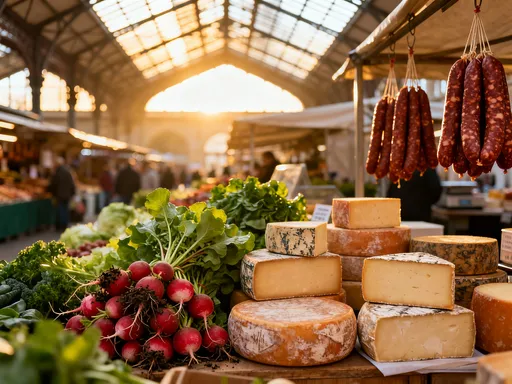
As dawn breaks over Da Lat, the city’s heart begins to beat in the rhythm of the central market and its surrounding streets. The Da Lat Market, a bustling complex of covered stalls and open-air vendors, is where commerce and community converge in vibrant harmony. By 5:00 a.m., farmers from the surrounding highlands arrive with crates of fresh produce—crisp lettuce, purple cabbage, cherry tomatoes, and long beans—all grown in the fertile volcanic soil. Flower vendors arrange armfuls of chrysanthemums, roses, and orchids, their colors glowing in the early light. The air fills with the scent of damp earth, grilled meat, and steaming phở broth.
This is not a tourist performance; it is real urban life in motion. Local residents move through the market with purpose, selecting ingredients for breakfast or stocking up for the day. Elderly women bargain gently with vendors, while motorbikes weave carefully through the narrow aisles, loading goods for delivery. The market is both a practical hub and a sensory experience—a living postcard of highland culture. Unlike sanitized supermarkets, it thrives on human interaction, where trust is built over repeated transactions and small talk is part of the exchange.
Adjacent streets come alive with street food stalls. The most popular serve bánh mì with grilled pork or pâté, their crusty baguettes a legacy of French influence. Others offer hot bowls of bún bò Huế or freshly boiled sweet corn. These open-air kitchens operate out of makeshift carts or small storefronts, often run by families for generations. The act of eating here is not hurried; it’s part of the morning ritual, a moment to pause and connect. Locals sit on low plastic stools, sipping coffee from tiny cups, discussing the weather or the latest news.
The market district exemplifies how public space in Da Lat serves multiple functions simultaneously. By day, it is a commercial center; by evening, it transforms into a pedestrian zone with handicraft stalls and live music. The same streets that carry produce trucks in the morning become stages for informal performances and socializing at night. This fluidity reflects a city that values adaptability and community over rigid zoning. For the urban wanderer, the market is not just a destination, but a starting point—a place to tune into the city’s rhythm before setting off on a day of exploration.
Green Threads: Parks, Lakes, and Nature’s Role in the Cityscape
In Da Lat, nature is not an escape from the city—it is woven into its very structure. Xuan Huong Lake, a long, serpentine body of water that curves around the city center, is the most visible example of this integration. Originally constructed as a reservoir in the 1930s, it has since become a beloved public space, lined with walking paths, paddle boat rentals, and shaded benches. Locals jog along its shores in the early morning, while couples stroll in the evenings, silhouetted against the sunset. The lake is not a pristine wilderness, but a managed landscape that invites interaction.
Surrounding the lake are public gardens and parks that further blur the boundary between urban and natural. The Dalat Flower Gardens, located just north of the city center, cover several hectares with meticulously arranged beds of roses, marigolds, and hydrangeas. These spaces are not just decorative; they are functional, serving as venues for festivals, photography, and quiet contemplation. Even in the densest parts of the city, greenery finds a way in—ivy climbs old walls, trees grow through cracks in sidewalks, and rooftop gardens sprout from apartment buildings.
This emphasis on green space reflects a deeper philosophy about urban well-being. In a world where cities are often criticized for being concrete jungles, Da Lat demonstrates how nature can be a core element of city planning. Parks and lakes are not afterthoughts, but essential infrastructure for mental and physical health. They provide places to rest, exercise, and socialize—spaces where people can reconnect with themselves and each other. The presence of nature also moderates the climate, keeping temperatures mild and air quality relatively good.
For the wandering traveler, these green spaces offer moments of pause and reflection. A bench by the lake, a shaded path through a eucalyptus grove, or a quiet corner in a botanical garden becomes a sanctuary from even the gentlest urban stimuli. They remind us that cities do not have to be overwhelming to be meaningful. In Da Lat, nature is not a luxury—it is a daily companion, shaping how people move, rest, and live.
Why Wandering Matters: Reclaiming the Art of Slow Urban Discovery
In an age of optimized itineraries, curated experiences, and digital distractions, the simple act of wandering has become a radical practice. Da Lat, with its human-scaled streets, layered history, and culture of stillness, offers a powerful reminder of what we gain when we slow down. To walk without a destination is not to waste time—it is to reclaim attention, to notice details, and to allow the city to reveal itself on its own terms. This kind of exploration fosters a deeper connection to place, one that goes beyond sightseeing to genuine presence.
The city’s walkable scale makes this possible. Distances are manageable, streets are safe, and the environment is visually rich without being overwhelming. One can easily spend a day moving from a colonial villa to a hilltop café, down a hidden staircase, and into a morning market—all on foot, all without a map. Each encounter, whether with a person, a scent, or a view, becomes part of a larger narrative. There is no need to document every moment; some experiences are meant to be felt, not captured.
Moreover, aimless wandering cultivates mindfulness. It encourages us to be in the present, to listen to the rustle of leaves, to notice the way light falls on a moss-covered wall, to savor the taste of street food bought on impulse. These small, unplanned moments often become the most memorable. They remind us that travel is not just about where we go, but how we move through the world.
Da Lat does not demand admiration through grand monuments or dramatic landscapes. Instead, it invites intimacy through quiet streets, shared spaces, and the gentle rhythm of daily life. It teaches that the most meaningful urban experiences are not found in guidebooks, but in the act of paying attention. So the next time you visit a city, resist the urge to optimize. Put away the phone, step off the main road, and let yourself get lost. You may not find what you were looking for—but you might discover something far more valuable.