Northern Lights and Frozen Magic: My Secret Photo Spots in Tromsø
Tromsø, Norway, is a dreamland for anyone chasing the raw beauty of the Arctic. I never expected how deeply the northern lights and snow-covered landscapes would move me. This city, nestled above the Arctic Circle, offers more than just cold air—it’s a gateway to natural wonders that feel almost otherworldly. If you’re after unforgettable photos and real moments in nature, you gotta see these spots. With its dramatic mountains, frozen fjords, and skies that dance with color, Tromsø delivers an experience that stays with you long after the snow melts. It’s not just a destination—it’s a feeling of quiet awe, of being small beneath a vast, living sky.
Why Tromsø Stole My Heart – More Than Just a Winter Destination
Tromsø isn’t just another winter escape; it’s a place where the rhythm of life slows to match the quiet hush of snowfall and the soft glow of twilight. Located over 350 kilometers north of the Arctic Circle, this vibrant city stands as a beacon of warmth in an otherwise frozen world. What struck me most upon arrival was not the cold—but the silence. The way sound seems muffled under layers of snow, how even the busiest streets feel intimate when dusted in white. There’s a stillness here that invites reflection, a sense of being disconnected from the noise of everyday life and reconnected with something older and deeper.
Yet, for all its remoteness, Tromsø is surprisingly accessible and welcoming. It’s home to a thriving university, a lively cultural scene, and locals who embrace the long winters with resilience and joy. This blend of human warmth and wild nature is what makes the city so special. It doesn’t just offer views of the Arctic—it lets you live inside it, even if only for a few days. Whether sipping coffee in a cozy café watching snow fall over red wooden houses or stepping onto a frozen lake at dawn, Tromsø offers moments that feel both magical and real.
Many travelers come for the northern lights, and rightly so—but what they often leave with is more than photographs. They carry memories of crisp air filling their lungs, of stars brighter than they’ve ever seen, and of a landscape so pure it feels untouched by time. Tromsø doesn’t shout its beauty; it whispers it. And those who listen closely are rewarded with a sense of peace that’s rare in modern life. It’s not just a place to visit—it’s a place to remember what stillness feels like.
The Northern Lights: Nature’s Dazzling Light Show
The aurora borealis is the crown jewel of any Arctic journey, and Tromsø sits in one of the best seats on Earth to witness it. These shimmering ribbons of green, purple, and sometimes red light are the result of charged particles from the sun colliding with Earth’s atmosphere. When solar winds meet gases like oxygen and nitrogen in the upper atmosphere, they release energy in the form of light—creating the celestial dance known as the northern lights. While the science is fascinating, nothing prepares you for the emotional impact of seeing them in person.
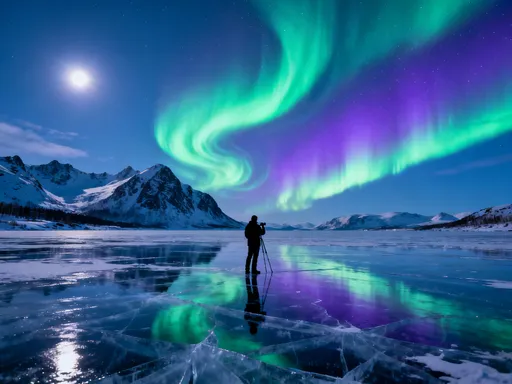
The best viewing season runs from late September to early April, when nights are long and skies are dark. Tromsø’s location—far enough north to catch frequent auroral activity, yet accessible and equipped with infrastructure—makes it a top destination for photographers and dreamers alike. I remember standing on a frozen lake outside the city, camera set up on a tripod, waiting in the cold. For over an hour, the sky was still. Then, almost silently, a faint green glow appeared in the north. Within minutes, it surged into motion—waves rippling across the sky, curling like silk in the wind. The colors deepened, the patterns shifted, and the entire landscape was bathed in an ethereal glow.
What struck me most was the silence. No music, no commentary—just the soft crunch of snow underfoot and the occasional whisper of wind. The lights didn’t perform for us; they simply existed, indifferent to our awe. That moment taught me something important: some of nature’s greatest shows aren’t meant to be captured perfectly on camera. They’re meant to be felt. Still, with the right preparation, you can take home both memories and images that do justice to the spectacle. The key is patience, timing, and knowing where to go.
Top Photo Spot #1: The Arctic Cathedral – Where Architecture Meets Wilderness
One of the most iconic landmarks in Tromsø is the Tromsdalen Church, affectionately known as the Arctic Cathedral. Its striking triangular design rises like a glacier from the flat valley floor, its white facade reflecting the snow and sky. Built in 1965, the cathedral stands as a bold contrast to the natural world around it—yet somehow, it belongs. The large stained-glass window on the east wall, depicting the resurrection, glows warmly when lit from within, especially during the dark winter months. It’s not just a place of worship; it’s a work of art framed by mountains and ice.
For photographers, the best views are from across the Tromsø Bridge, especially at dusk or during the blue hour. When the sky turns soft shades of lavender and pink, the cathedral’s reflection appears perfectly mirrored on the frozen surface of the river below. The symmetry is breathtaking. I recommend arriving early to scout the area—there are several angles that offer slightly different perspectives. One of my favorite shots was taken from the riverbank, with the cathedral centered and a single set of footprints leading toward it across the ice, adding a sense of scale and story.
The site is easily accessible by foot or car, and there’s a small parking area nearby. While the interior is worth visiting, the exterior is where the magic happens for photography. Because it’s set apart from the city center, the surrounding area is often quiet, even in peak season. That means fewer crowds and more time to compose your shot. Whether you’re using a professional DSLR or just your smartphone, the Arctic Cathedral offers a powerful visual moment—one where human creativity and natural grandeur stand side by side.
Top Photo Spot #2: Fløyan Mountain via Cable Car – A Sky-High Perspective
For a panoramic view of Tromsø and its dramatic surroundings, nothing compares to the Fløibanen cable car ride up to Fløyan Mountain. The journey itself is part of the experience—wooden cabins glide smoothly up the steep slope, offering changing perspectives with every meter climbed. Within minutes, the city shrinks below, revealing a stunning patchwork of icy fjords, snow-covered peaks, and red and yellow houses clinging to the hillsides. On clear days, the view stretches for dozens of kilometers, with frozen islands dotting the sea like scattered stones.
The upper station opens directly into a small café and viewing platform, but the real photo opportunities begin with a short walk along the marked paths. I went early in the morning, just after sunrise, when the light was soft and golden. The city lights were still on below, creating a contrast between warmth and cold, movement and stillness. The long exposures I took captured both the glow of windows and the sharp silhouette of mountains against the dawn sky. Because the air is so clean and the skies so open, colors appear more vivid, and shadows are crisp and defined.
It’s important to dress warmly—wind chill at this elevation can be intense, even on calm days. I wore thermal layers, a down jacket, and insulated gloves, plus a hat that covered my ears. Camera gear should be protected from sudden temperature changes; I kept my spare batteries inside my coat to prevent them from draining too quickly. While the cable car is popular, going early or late in the day helps avoid crowds. And if you’re lucky enough to be there during an aurora night, the view from Fløyan is unforgettable—watching the lights ripple over the city from above feels like seeing the world from another planet.
Top Photo Spot #3: Frozen Lakes Beyond the City – Quiet and Unreal
Some of my most cherished photos came not from famous landmarks, but from quiet, unnamed frozen lakes just a short drive from Tromsø. These hidden spots, tucked between forests and hills, offer a kind of solitude that’s hard to find elsewhere. When I first stepped onto the ice at one such lake, I felt like I’d entered another world. The surface was smooth and glassy, reflecting the sky with such clarity it was hard to tell where water ended and air began. The snow around the edges had been sculpted by wind into soft waves, frozen in time.
These lakes are best reached by renting a car, which gives you the freedom to explore at your own pace. I drove west along the E8 highway, then turned onto smaller roads marked only by snowplow tracks. After about 30 minutes, I found a pull-off near a frozen expanse surrounded by pines. No signs, no facilities—just nature in its purest form. I walked carefully across the ice, testing each step, aware of the deep water beneath. But the cold had sealed it thick and solid. As the sun rose, the sky shifted from deep blue to soft pink, and the ice began to glow from within.
The reflections were so sharp they looked like digital edits. I set up my tripod and experimented with long exposures, capturing the subtle movement of clouds and the faint blush of dawn. Sometimes, I just sat and listened. The silence was profound—no engines, no voices, just the occasional crack of ice adjusting to temperature changes. In that stillness, I realized that the best photos don’t always come from the most dramatic scenes. They come from moments of presence, when you stop chasing perfection and simply let the landscape speak.
Chasing Sunsets and Blue Hour in Urban Tromsø – Beauty in the Everyday
While the wilderness calls to adventurers, the city of Tromsø itself holds a quiet charm that’s perfect for intimate, human-scale photography. As the sun dips below the horizon—briefly, in winter—the streets enter what photographers call the blue hour. During this time, the sky turns a deep, luminous blue, and artificial lights begin to glow like fireflies. The colorful wooden houses along the harbor take on a storybook quality, their windows lit from within, smoke curling from chimneys.
Walking along the waterfront, I noticed fishermen repairing nets, their breath visible in the cold air. A dog sled team passed by during a training run, the huskies barking excitedly as they pulled the sled over packed snow. These everyday moments, often overlooked, became some of my favorite shots. There’s a rhythm to life in Tromsø that feels both resilient and joyful—a sense that people aren’t just surviving the winter, but thriving in it.
The University of Tromsø campus, with its modern architecture and snow-covered courtyards, also offers great photo opportunities. I captured a striking image of students walking between buildings, their bright winter coats forming dots of color against the white landscape. Even the local grocery store, with its frost-covered windows and displays of dried fish and reindeer meat, felt like part of the story. These scenes remind us that beauty isn’t only found in grand vistas—it’s also in the way people live, adapt, and find warmth in the coldest months.
Photography Tips and Real Talk: What I Learned the Hard Way
Photographing in the Arctic comes with unique challenges, and I made nearly every mistake possible on my first trip. The cold is the biggest enemy—not just to you, but to your gear. Batteries drain quickly in freezing temperatures, so I now carry at least three spares, keeping them warm inside my coat until I need them. I also use a thermal cover for my camera when shooting long exposures at night. Condensation is another issue: when moving from cold outdoors to warm indoors, moisture can fog lenses and damage electronics. My rule now is to seal all gear in airtight plastic bags before coming inside, letting it warm up slowly over several hours.
A sturdy tripod is essential for northern lights photography. Handheld shots won’t capture the faint glow of the aurora—you need exposures of several seconds, sometimes up to 20 or 30. I use a remote shutter or timer to avoid camera shake. Manual focus is also critical; autofocus struggles in low light. I set my lens to infinity and fine-tune using live view on a bright star or distant light. For composition, I always look for foreground elements—trees, rocks, footprints in snow—to add depth and scale.
Dressing properly is just as important as having the right gear. I wear three layers: a moisture-wicking base, an insulating mid-layer like fleece, and a windproof, waterproof outer shell. Wool socks, insulated boots, and mittens with liner gloves give me the dexterity to adjust settings without freezing my fingers. And I never underestimate the wind—it can make a -5°C day feel like -15°C in minutes.
But beyond the technical tips, the biggest lesson I’ve learned is this: don’t let the pursuit of the perfect shot make you miss the moment. I once spent so long adjusting my camera for an aurora shot that I forgot to look up and just watch. When I finally did, the lights were gone. Now, I make it a rule to spend at least ten minutes per night just standing still, breathing, and absorbing the scene. The best photos often come when I’m not trying so hard—when I’m simply present.
Conclusion: Why Tromsø Stays With You Long After You Leave
Tromsø is more than a destination for northern lights chasers or winter photographers. It’s a place that reminds us of nature’s quiet power, of beauty that doesn’t need an audience to exist. The combination of light, landscape, and solitude creates something deeper than a vacation—it creates a shift in perspective. You return home not just with photos, but with a renewed sense of wonder.
The frozen lakes, the glowing cathedral, the cable car rising into the clouds, the quiet streets at twilight—each moment adds to a larger truth: that some of the most profound experiences happen in stillness. In Tromsø, there’s no need to rush, no pressure to see everything. The landscape invites you to slow down, to listen, to feel the cold air and the vastness of the sky.
And when the northern lights appear, dancing above the snow, you realize they weren’t waiting for you. They’ve been there all along, moving in their ancient rhythm, indifferent to human presence. That’s what makes the experience so powerful—it’s not about control or capture. It’s about witnessing something greater than yourself.
So if you’re looking for a journey that challenges your senses and expands your view of the world, consider Tromsø. Go for the photos, stay for the silence, and leave with a heart full of quiet awe. Because in the end, the best travel moments aren’t the ones you plan—they’re the ones that find you, under a sky alive with light.