You Won’t Believe What Happens When Nantes Throws a Party
Nantes, France doesn’t just celebrate—it transforms. When festival season hits, this riverside city pulses with light, sound, and surreal street art that feels alive. I’ve never seen urban spaces come so vividly to life, where machines breathe, trees sing, and crowds follow glowing elephants through cobbled streets. These aren’t just events—they’re shared dreams, carefully crafted and wildly experienced. If you're chasing something beyond the typical European tour, Nantes’ festival magic offers a breathtaking glimpse into the soul of a city that dares to imagine differently.
The Heartbeat of Nantes: Festivals as Urban Revival
Nantes is a city reborn—not through demolition or displacement, but through imagination. Once a bustling industrial port known for shipbuilding and maritime trade, Nantes faced decline in the late 20th century as factories shuttered and dockside activity dwindled. Rather than surrender to decay, the city chose a bold new path: cultural regeneration. Starting in the 1980s and accelerating under visionary mayoral leadership, Nantes began investing heavily in public art, performance, and creative urban design. The result? A transformation that didn’t erase history but reinterpreted it—turning rust into wonder, silence into music, and forgotten spaces into stages for celebration.
This renaissance is most visible during its signature festivals, which are not mere add-ons to city life but central to its identity. Events like Les Machines de l’Île and Voyages à Nantes are not imported attractions; they are homegrown expressions of a community that values creativity as a form of civic pride. Unlike cities that host festivals as temporary tourism boosts, Nantes integrates them into the urban fabric. Public squares, abandoned warehouses, and riverbanks become living galleries and performance zones. The city doesn’t just accommodate art—it invites it in, nurtures it, and lets it reshape how people move through and relate to their environment.
What sets Nantes apart is the depth of its commitment. These festivals are not one-off spectacles but part of a long-term cultural strategy. The city allocates public funding, collaborates with artists, and involves local residents in planning and participation. This ensures authenticity and continuity. The festivals reflect Nantes’ past while pointing toward a future where culture is not a luxury but a necessity—a driver of economic vitality, social cohesion, and emotional well-being. For visitors, this means experiencing a city that doesn’t perform for tourists but lives its values every day.
Voyages à Nantes: Art You Walk Through, Not Just Watch
Every summer, from early July to late August, Nantes becomes an open-air museum without walls. Voyages à Nantes transforms the entire city into a curated journey of artistic discovery, where every turn reveals something unexpected. At the heart of this experience is the Green Line, a 14-kilometer route marked by green strips on the pavement, guiding visitors through streets, parks, and quays to over 30 permanent and temporary installations. This is not passive sightseeing—it’s immersive exploration, where art is not observed from a distance but entered, touched, and sometimes even ridden.
One of the most iconic stops along the Green Line is the Machine de Marécage, a towering mechanical spider that crawls slowly across a wetland park, its movements powered by hydraulic systems and controlled by engineers in real time. Children laugh as it waves its legs; adults marvel at the precision of its design. Nearby, the Carrousel des Mondes Marins invites riders onto a rotating carousel filled with fantastical sea creatures—flying fish, glowing jellyfish, and mechanical octopuses—each crafted with intricate detail. The carousel is not just for children; its dreamlike quality stirs wonder in all who step aboard.
What makes Voyages à Nantes truly special is its accessibility. All installations are free to visit, removing financial barriers and encouraging broad participation. Whether you’re a local taking an evening stroll or a traveler exploring for the first time, the festival welcomes you with open arms. The city provides detailed maps, mobile apps, and multilingual guides, making navigation simple. For those who prefer to travel on two wheels, Nantes offers an extensive bike-sharing system, and many choose to follow the Green Line by bicycle, pausing whenever something catches their eye.
The festival also embraces spontaneity. Pop-up performances—jugglers, musicians, living statues—appear without warning in small plazas or under bridges. A saxophonist might play beneath the Érienne Bridge at sunset; a troupe of dancers might erupt into motion in the middle of Place du Bouffay. These moments are unannounced, unadvertised, and all the more magical for it. They remind visitors that in Nantes, art isn’t confined to galleries or schedules—it lives in the streets, breathing with the rhythm of daily life.
Les Machines de l’Île: Where Fantasy Takes Mechanical Form
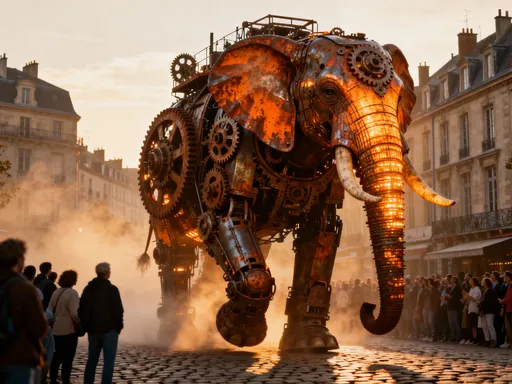
No symbol captures the spirit of Nantes better than the Grand Éléphant, a 12-meter-tall mechanical beast that walks the streets like a creature from a Jules Verne novel. This marvel is the centerpiece of Les Machines de l’Île, a permanent artistic project born from the city’s industrial past and boundless imagination. Located on the historic shipbuilding site of the Île de Nantes, the complex functions as both a workshop and an attraction, where visitors can watch artisans build fantastical machines, then ride or walk alongside them.
The Grand Éléphant offers public rides several times a day, carrying up to 50 passengers on a 30-minute journey through the former shipyards. As the elephant moves with a slow, deliberate gait, its wooden frame creaks, steam rises from its trunk, and music plays from hidden speakers. From the howdah on its back, riders see the city from an entirely new perspective—higher than a bus, slower than a car, dreamier than any train. The experience is both whimsical and awe-inspiring, a testament to the power of combining art, engineering, and storytelling.
Beyond the elephant, the site features the Galerie des Machines, an underground hall housing prototypes, sketches, and smaller creations like the Heron Tree, a 8-meter-tall mechanical tree with wings that unfold like a bird’s. Visitors can also explore the Marine Worlds Carousel, a rotating platform filled with sea creatures inspired by deep-ocean life and mythology. Each animal moves independently, creating a mesmerizing dance of gears, hydraulics, and light.
For those interested in the creative process, guided tours of the workshop offer a behind-the-scenes look at how these machines are built. Engineers, sculptors, and designers work side by side, blending traditional craftsmanship with modern technology. The atmosphere is collaborative and joyful, a place where mistakes are part of the process and every new idea is welcomed. Tickets for rides and tours should be booked weeks in advance, especially during peak summer months, but the effort is worth it. After your visit, relax at one of the nearby cafés, such as La Cantine du Voyage, where you can sip coffee while watching the elephant walk by—a moment that never loses its magic.
La Folle Journée: When Classical Music Becomes a Mass Celebration
Each January, Nantes undergoes another transformation—this time into a citywide concert hall. La Folle Journée, or “The Crazy Day,” is one of the most celebrated classical music festivals in Europe, drawing over 200,000 attendees annually. What began in 1995 as a single-day event has grown into a nine-day extravaganza featuring more than 300 performances across dozens of venues. From the grand Théâtre Graslin to the echoing halls of the Gare Maritime, even the central train station becomes a stage for symphonies, chamber music, and solo recitals.
The festival’s genius lies in its accessibility. Concerts are priced at just €10, with reduced rates for children and families, ensuring that classical music is not an elite pursuit but a shared cultural experience. This pricing model has revolutionized audience demographics, attracting young people, seniors, and families who might never have set foot in an opera house. The result is a diverse, enthusiastic crowd—thousands gathered in silence, united by the beauty of a violin solo or the power of a full orchestra.
The atmosphere is electric. Concerts often sell out, and the streets between venues buzz with conversation, anticipation, and post-performance reflections. Many attendees plan their days like pilgrims of sound, moving from one performance to the next, sometimes catching three or four in a single day. The festival also features talks, workshops, and children’s concerts, making it a true celebration of music in all its forms.
For visitors, planning is key. Accommodations in Nantes fill up quickly during La Folle Journée, so booking hotels or rentals three to six months in advance is advisable. The festival website offers a detailed program with filters by composer, instrument, and venue, allowing you to build a personalized schedule. Even if you don’t speak French, the music transcends language, and program notes are available in English. Whether you’re a lifelong classical fan or a curious newcomer, La Folle Journée offers a rare opportunity to experience music not as a passive listener but as part of a living, breathing community of sound.
Off-the-Beaten-Path Festival Moments: Local Secrets Beyond the Guidebooks
While the major festivals draw international attention, some of Nantes’ most memorable experiences happen quietly, in neighborhood corners and hidden squares. These are the moments that reveal the city’s soul—not polished for tourism, but lived with authenticity. One such tradition is the bal populaire, or community dance, held in districts like Malakoff or Dervallières. On warm summer evenings, local bands play folk, jazz, or world music, and residents of all ages gather to dance in the streets. There are no VIP sections, no tickets—just music, movement, and connection.
Another hidden gem is the open-air cinema series along the Loire River. During July and August, the Cinéma en Plein Air sets up large screens on the quays, showing classic films, animations, and French favorites. Families bring blankets, picnic baskets, and children in pajamas, creating a cozy, communal atmosphere. The river glimmers behind the screen, and the breeze carries the scent of water and fresh bread. These screenings are free or low-cost, and they embody the Nantes spirit of bringing culture to everyone, everywhere.
Keep an eye out for spontaneous puppet shows in small parks, often performed by local troupes using handcrafted marionettes. These performances, usually in French, rely on visual storytelling, making them accessible even to non-speakers. Children crowd around the tiny stages, mesmerized by the movement and music. To discover these moments, talk to locals, check community bulletin boards, or visit cultural hubs like Le Lieu Unique, a former biscuit factory turned multidisciplinary arts center. Staff there are happy to share upcoming events, many of which never make it into guidebooks but are deeply cherished by residents.
Planning Your Festival Trip: Timing, Transport, and Smart Choices
Timing your visit to Nantes around its festivals can make the difference between a pleasant trip and a transformative one. Summer, from early July to late August, is ideal for Voyages à Nantes and outdoor experiences. The weather is mild, days are long, and the city is alive with energy. Winter, particularly late January, offers the magic of La Folle Journée, with the added charm of festive lights and cozy cafés. Each season has its rewards, and choosing depends on your interests—art and sunshine, or music and intimacy.
Getting to Nantes is easy. The city is just 2 hours from Paris by high-speed TGV train, with frequent departures from Gare Montparnasse. The train station is centrally located, and from there, everything is within walking distance or a short bike ride. Nantes is one of France’s most bike-friendly cities, with over 500 kilometers of cycling paths and a reliable bike-sharing system. River shuttles also operate during summer, offering scenic views of the city from the Loire.
Accommodation ranges from boutique hotels in the historic center to family-run guesthouses in quiet neighborhoods. During festival peaks, book at least three to four months in advance. Consider staying near Place du Commerce or the Île de Nantes for easy access to major sites. Pack comfortable walking shoes—Nantes is best explored on foot—and a light rain jacket, as showers can appear unexpectedly, even in summer. A small backpack with water, snacks, and a portable charger will keep you energized during long days of exploration.
For families, many festivals offer child-friendly activities, but提前 booking is essential for rides and workshops. For solo travelers or couples, the city’s compact size and welcoming atmosphere make it easy to navigate and enjoy. Whether you’re here for art, music, or simply the joy of discovery, Nantes rewards those who come with curiosity and an open heart.
Why Nantes’ Festivals Stay With You: The Emotional Geography of Place
Long after the music fades and the mechanical elephant returns to its shed, something lingers. It’s not just the memory of what you saw, but the feeling of what you experienced—a sense of wonder, connection, and possibility. Nantes’ festivals do more than entertain; they reshape how we think about cities, art, and community. In a world where urban life can feel alienating, Nantes offers a powerful alternative: a place where creativity is public, joy is collective, and imagination is infrastructure.
These festivals stay with you because they engage more than your eyes and ears—they touch your emotions and awaken your sense of play. Riding the Grand Éléphant isn’t just a photo opportunity; it’s a moment of childlike awe. Listening to a symphony in a train station isn’t just a concert; it’s a reminder that beauty belongs everywhere. Dancing in a neighborhood square isn’t just exercise; it’s a bond with strangers who become companions, if only for a song.
What makes Nantes unique is that its festivals are not escapes from reality but enhancements of it. They don’t create a fantasy world separate from daily life; they reveal the magic already present in streets, rivers, and shared spaces. The city invites you not as a spectator, but as a participant—to walk the Green Line, join the dance, hum along to the music, and believe, if only for a moment, that the impossible might be possible.
So if you’re ready to see a city that celebrates not just with fireworks and fanfare, but with courage, creativity, and heart, let Nantes be your next destination. Come not to watch a festival, but to live one. Because in Nantes, the party isn’t something that happens—it’s something that grows, breathes, and transforms everyone it touches.